If a trip to China does not fall under a visa-free policy, a visa-free transit arrangement, or another special entry route, the normal path is a regular visa application before departure. In practice, this process begins with the same basic questions every applicant needs to answer: what is the real purpose of the trip, which visa type matches that purpose, what documents need to be prepared, where the application should be submitted, and how long the processing is likely to take.
A China visa application is easiest to understand as a sequence rather than a single form. The practical order is: check the passport, identify the correct visa category, prepare the basic documents, add the supporting documents that match the trip purpose, complete the application form correctly, submit at the proper office, and check the issued visa carefully after collection. This order matters because basic requirements may stay similar across applications, but the supporting documents change according to the visa type.
China Visa Application Process at a Glance
A regular China visa application is easier to understand when viewed as a sequence of practical steps.
- Choose the right visa type
- Check passport validity
- Prepare basic documents
- Add supporting documents
- Complete the application form
- Submit and check the issued visa carefully
Start with the Right Visa Type
China uses different visa categories for different purposes of visit. Visa categories include Diplomatic Visa, Service Visa, Courtesy Visa, and Ordinary Visa, but for most ordinary travelers the main focus is on the Ordinary Visa group and its sub-types. Among the categories used in this application system are Tourist Visa (L), Business Visa (M), Work Visa (Z), Exchange or Study Tour Visa (F), Student Visa (X), Transit Visa (G), and Family Reunion Visa (Q).
This first step is important because the purpose of the trip controls the rest of the application. A tourist trip, a business visit, study, work, family reunion, and transit do not use the same supporting documents. Tourist applications are tied to sightseeing and travel arrangements, business applications to commercial activity documents, student applications to school admission materials, work applications to work-permit-related documents, and family reunion applications to invitation and relationship documents. Choosing the right category is not just a label on the form; it determines what proof needs to be submitted with the application.
Passport and Basic Eligibility
The passport is the basic identity document in the application process. For a regular China visa application, the passport should have at least six months of remaining validity and at least two blank visa pages. A photocopy of the passport data page is also required.
Some situations require more than the passport alone. If the application is submitted outside the applicant’s own country of nationality, proof of legal stay, residence, work, or study in the country of application is required. If the applicant was previously a Chinese citizen and later obtained a foreign nationality, a former Chinese passport, or records of earlier Chinese visas, may also need to be provided depending on the case. These are not general tourist requirements for everyone, but they are important in applications that fall outside the standard situation.
Basic Documents for a China Visa Application
Typical Basic Documents
These are the core materials that commonly appear across regular China visa applications.
- Passport
- Visa application form
- Recent photo
- Proof of legal stay or residence where applicable
- Earlier Chinese passport or visa records in special cases
A China visa application is built from two layers: basic documents and supporting documents. The basic documents are the core materials that appear across regular visa applications. They include the passport, the visa application form, recent photos, and in some cases proof of legal stay or residence in the country of application. Earlier Chinese passport or visa records may also be part of the application package for former Chinese citizens or repeat applicants with older passport records.
The photo requirement is generally a recent, frontal, bareheaded color photo against a light background. The form must be completed correctly, printed, and signed where required. At this stage, the basic document package is not supposed to prove the reason for the visit in detail; that role belongs to the supporting documents. The purpose of the basic documents is to establish identity, nationality, and formal completion of the application.
Supporting Documents by Visa Type
Supporting documents connect the application to the actual purpose of travel. For a Tourist Visa (L), this usually means travel itinerary materials such as round-trip flight bookings and hotel booking records, or an invitation letter from an individual or company in China. Where an invitation letter is used, it should include information about the traveler, the inviter, and the planned visit. In one special case included in the source material, U.S. nationals applying for a Chinese Tourist Visa do not need to provide flight bookings, hotel bookings, China itineraries, or invitation letters.
For a Business Visa (M), commercial activity documents and invitation letters from a Chinese trade partner or business entity are required. For a Student Visa (X), the application should include an admission letter from a school or recruiting institution in China together with the Visa Application for Study in China form, such as JW201 or JW202. For a Family Reunion Visa (Q1/Q2), the required materials include an invitation letter, proof of the inviter’s identity or permanent residence status, and documents proving the family relationship. Work Visa (Z) applicants are expected to provide work-permit-related materials and proof connected to legal employment in China.
This is why a China visa application cannot be prepared correctly by collecting generic paperwork only. A complete application always combines the same core identity documents with a second layer of purpose-based materials that show exactly why the traveler is going to China.
Complete the Application Form Correctly
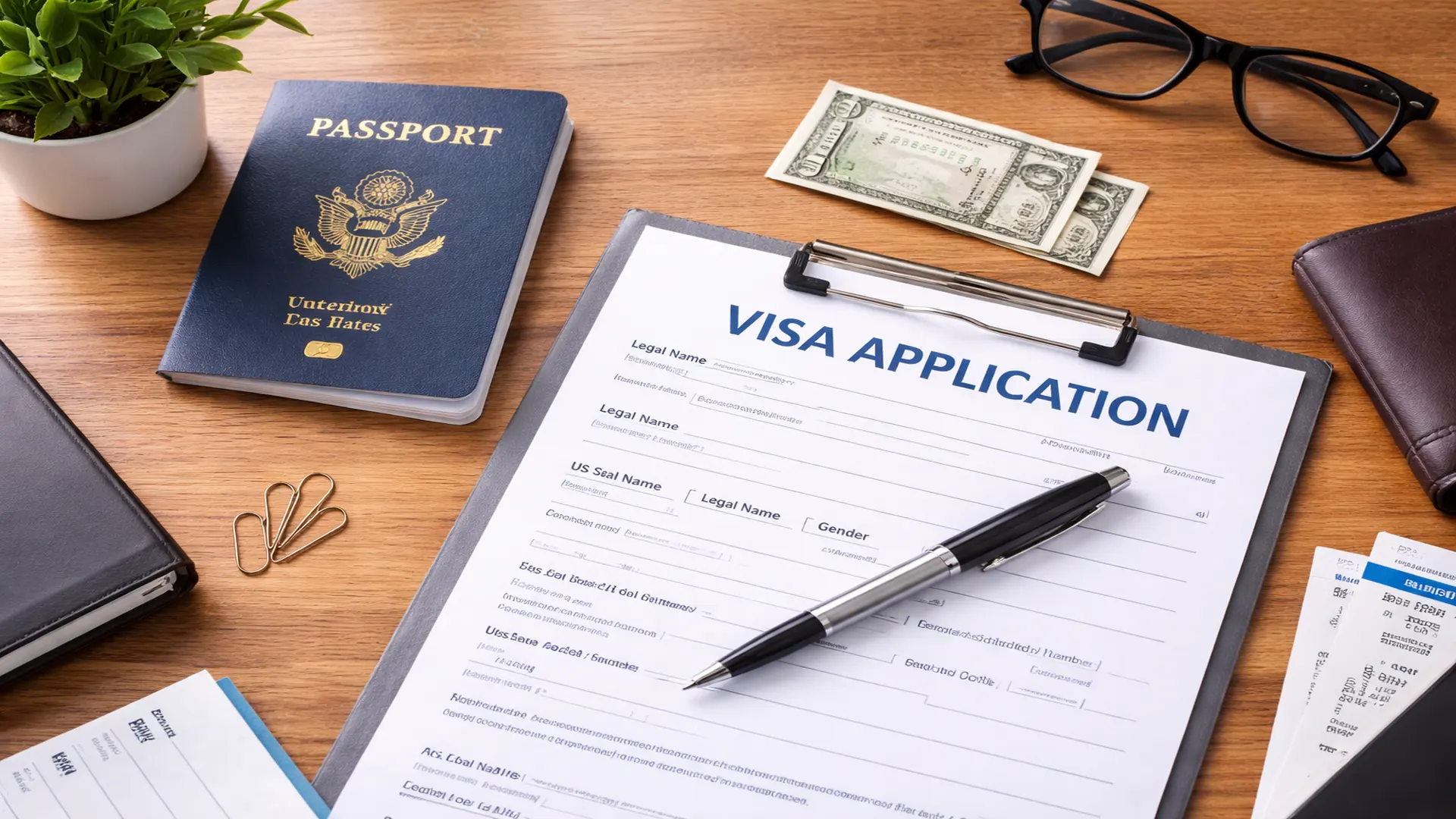
The visa application form is one of the most important parts of the process. The current form process is based on online completion rather than handwritten submission. Handwritten application forms are not accepted where the online system applies. The form must be completed electronically, printed out, and signed on the required pages before submission.
This process includes the COVA system, or China Online Visa Application, through the official platform where available. In some countries, the form may instead be completed through the China Visa Application Service Center website rather than through exactly the same channel used elsewhere. The key requirement is the same in every case: the form must be filled in truthfully, accurately, and completely. Once a form has been submitted online, the information cannot simply be corrected on the same record; if changes are needed, a new form may need to be completed. If another person fills out the form on the applicant’s behalf, that person’s information must also be provided.
This stage deserves careful attention because form errors can stop the application from being accepted. The completed set must be printed in full and signed where required. An incomplete, unsigned, or incorrectly prepared form can block the process even when the other documents are ready.
Appointment Rules and Where to Apply
A regular China visa application is normally submitted to the visa office of a Chinese Embassy or Consulate, or to a China Visa Application Service Center, depending on the country and region where the applicant resides. The embassy is the main diplomatic office in a country’s capital city, while consulates operate in other major cities. Each office or center may use its own local instructions, address system, and office hours.
Appointment rules are not identical everywhere. In many embassies and consulates, an appointment is not required, but this is not universal. The correct arrangement depends on the office that serves the place where the application is filed. For that reason, the local embassy, consulate, or visa center instructions should always be checked before submission rather than assumed.
Submission, Biometrics, and Collection
Once the form and all required documents are ready, the next step is submission. The applicant goes to the correct visa office or visa center, submits the signed application form together with the prepared materials, and chooses whether a faster processing service is needed. A pick-up slip is then issued, and that slip shows the collection date for the passport and visa.
If the applicant cannot submit in person, another person may be entrusted to submit the signed form and required materials. However, this does not remove the possibility of a personal appearance. A personal visit may still be required if biometric information is needed by the embassy or consulate. In other words, proxy submission is possible in some cases, but it does not eliminate every in-person requirement.
After processing, collection follows the local office procedure. Embassies and consulates generally do not provide mail-back service. When the application is submitted through a visa application service center, service charges are paid there and collection follows the center’s own process. The practical difference is that embassies and consulates are the official issuing authorities, while visa centers often handle intake and service procedures.
Processing Time
Regular service usually takes about four to five business days, with the exact collection date shown on the pick-up slip. In a typical example, an application submitted on Monday may be ready for collection on Thursday under regular processing.
Faster options may also be available. Express service is generally a two-working-day option, while rush service is generally a one-working-day option, both with extra fees. At the same time, faster handling does not automatically guarantee immediate issuance if the application needs longer review. Additional examination by the visa officer can still extend the timeline.
Fee Logic
China visa fees do not follow one single flat rate for every applicant. The visa fee varies according to visa type, number of entries, duration of stay, and nationality. This means the fee logic is not fixed. Even within the same visa category, the cost may change when the number of entries changes or when the applicant’s nationality is different.
There is also an important difference between the visa fee itself and the service charge added by a visa application service center. When the application is filed through an embassy or consulate, the visa fee is paid there according to the local procedure. When the application is filed through a visa center, service fees are added on top of the visa fee. If express or rush handling is requested, additional charges also apply. In practice, total cost depends not only on the visa type, but also on where the application is filed and which processing speed is chosen.
Check the Visa Carefully After Collection
The final step is often overlooked, but it matters. After receiving the passport back, the visa should be checked carefully. The most important points to review are the visa type, duration of stay, number of entries, and validity period. A visa that does not match the actual travel plan can create problems even if the original application intention was correct.
In practice, the visa issued in the passport is what controls entry and stay. That means the final review after collection is part of the application process itself, not just a minor afterthought. A careful check at this stage is one of the simplest ways to avoid entry problems later.
Final Notes for Travelers
A China visa application is easier to manage when it is handled in order: confirm that a regular visa is really needed, choose the correct visa category, prepare the basic documents, add the right supporting documents, complete the form carefully, submit at the proper office, and check the issued visa after collection. Problems in the process are more likely to come from the wrong visa type, missing supporting documents, or form errors than from the existence of the process itself.