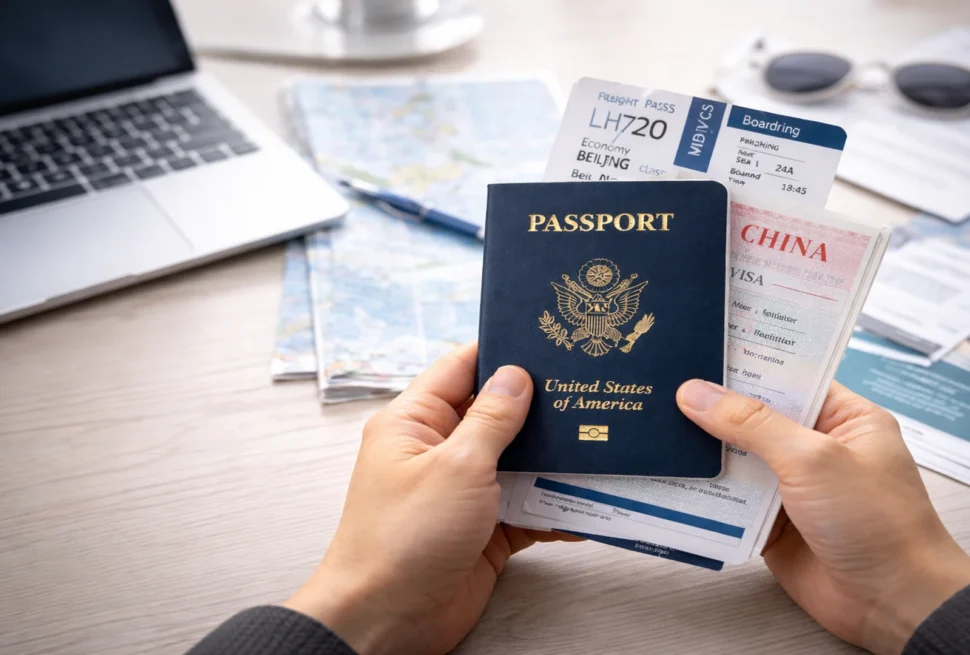
Travel to and from China does not end with a visa or entry permit. Entry procedures, customs declaration rules, baggage allowance, restricted items, and exit requirements can affect the trip in very practical ways. For many travelers, the most important questions are straightforward: when to use the green channel or the red channel, what needs to be declared, how much cash can be carried, what can go in carry-on baggage, what must be checked, and which items may not be brought in or taken out at all.
The rules for entry and exit are connected but not identical. Some thresholds apply only when entering China, while others apply only when leaving. The same is true for baggage. Carry-on and checked baggage follow different rules, and airline rules may vary by route and carrier even when the general framework remains similar. That is why entry, customs, baggage, and exit requirements are best understood together rather than as separate topics.
On This Page
Entering China: Channels, Declaration, and Examination
When entering China, the general process has three parts: Choose Channels – Customs Declaration – Customs Examination. Travelers who do not carry anything that needs to be declared may use the Nothing to Declare Channel (Green Channel). Travelers who carry items that require declaration should use the Goods to Declare Channel (Red Channel). If there is any uncertainty, asking customs officers or choosing the red channel is the safer option.
Customs examination follows the declaration stage. Customs officers may verify whether the declaration form is accurate and whether prohibited goods are present. Based on the examination, customs may decide on release, duty collection, detention, withdrawal, or other treatment of the baggage. This means the declaration step is not just a formality. It directly affects how goods are handled on entry.
What Must Be Declared When Entering China
Several situations require using the red channel when entering China. Inward passengers need to declare personal articles valued at RMB 2,000 or above. The same applies to alcoholic drinks of 1,500 ml or above with alcohol content of 12% or above, 400 cigarettes or more, 100 cigars or more, or 500 grams of tobacco or more. Cash also matters. A traveler carrying RMB 20,000 or above, or foreign currency cash equivalent to US$5,000 or above, must make a declaration. Animals, plants, animal and plant products, microbes, biological products, human tissues, blood and blood products, radio transmitters, communication security equipment, goods of commercial value, samples, advertisements, unaccompanied baggage, and other prohibited or restricted items must also be declared.
There is also an important distinction between RMB and foreign currency. The limit for bringing in RMB is 20,000 yuan, and the part above that amount is prohibited. For foreign currency, there is no overall quantitative restriction, but if the amount in cash is above US$5,000 equivalent, it must be declared accurately. That declaration record may matter again when leaving China because customs may check it at departure.
Personal articles are allowed only for personal use and in reasonable quantity. Personal use means private use or use as gifts for relatives or friends, not selling or lending. Reasonable quantity depends on the purpose of travel and the length of stay. If imported self-use items exceed the regulated quantity but still remain within a reasonable personal-use amount, import duty may apply before release. If they exceed even the reasonable personal-use quantity, they may be treated as imported goods and handled under different formalities.
Prohibited and Restricted Articles on Entry
Several categories of goods are prohibited from being brought into China. These include arms, imitation arms, ammunition, and explosives; counterfeit currency and negotiable securities; printed or recorded materials considered detrimental to China’s political, economic, cultural, or moral interests; deadly poisons; opium, morphine, heroin, marihuana, and other narcotic or psychoactive drugs; fresh fruit; solanaceous vegetables; live animals except dogs and cats; animal products; pathogens; pests; carcasses; soil; transgenic organism materials; and certain food, medicine, or other articles from epidemic-stricken areas or harmful to people or livestock.
There is also a separate restricted list for entry. Restricted items include radio transceivers and communication security machines, alcohol and tobacco, endangered and rare animals and plants and their related materials, national currencies, and other articles restricted by customs. This matters because restricted items are not automatically allowed simply because they are not on the prohibited list. They may still require declaration, approval, or special handling.
Several additional rules are also worth noting. Cellphones, cameras, video cameras, and similar equipment should not be used within customs control areas at entry and exit ports. Passengers under 16 years old are not allowed to bring cigarettes or alcohol.
Pets and Other Special Cases on Entry
Pet dogs and pet cats follow their own rules. One passenger may bring only one pet dog or pet cat into China. The passenger must declare the animal to customs, and customs will verify the quarantine certificate and rabies vaccination certificate issued by the official organization of the exporting country or region. The port animal and plant quarantine authority then handles quarantine procedures and issues a certificate with a validity of 30 days. If the traveler cannot provide the required certificates, or brings more than one pet, the animal may be temporarily detained.
This shows why entry rules cannot be reduced to luggage limits alone. Some items, animals, or substances involve quarantine, disease control, or separate administrative procedures beyond ordinary customs declaration.
Customs Declaration: What the Declaration Process Means
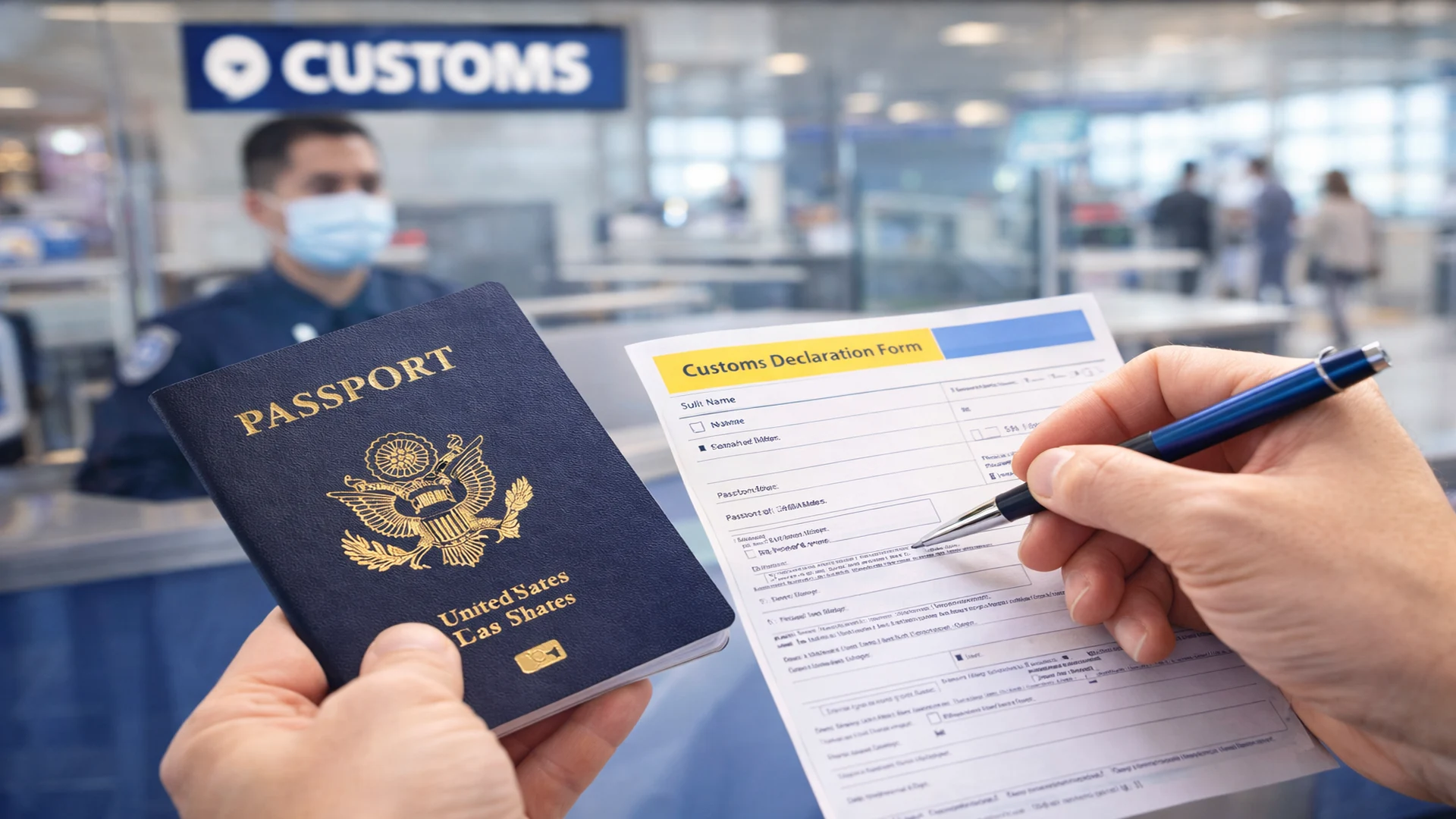
Customs declaration is a written declaration made by inward or outward passengers in order to fulfill obligations under the Customs Law of the PRC. The declaration form for inward or outward baggage is submitted at the customs declaration counter together with other declaration documents. The traveler must make a truthful declaration of the baggage carried, and the form should normally be filled in and signed by the passenger. If another person is entrusted to handle the process, the form still needs the passenger’s signature.
Travelers also need to present valid travel documents and authentication, and in some cases certification, business vouchers, or other necessary documents issued by relevant Chinese authorities for examination. In practical terms, declaration is not only about listing goods. It can also require supporting paperwork depending on what is being brought in or taken out.
Carry-On Baggage Rules
Air baggage is divided into carry-on baggage and checked baggage. Carry-on baggage is the luggage allowed in the cabin. Baggage that exceeds those limits, or includes items not suitable for carry-on travel, must be checked. Airline-specific rules may differ, so the general conditions should still be confirmed against the airline’s own website.
For domestic flights, the general carry-on rule is a total weight of no more than 5 kg, with the total of length, width, and height not exceeding 115 cm. First-class passengers may carry two pieces of carry-on baggage, while business-class and economy-class passengers may carry one piece. For international flights, the general carry-on weight is no more than 7 kg, with the same total size limit of 115 cm. On the American-Canada route, only one piece of carry-on baggage is allowed. Anything above the allowed size, weight, or number is treated as checked baggage.
Liquids, gels, and aerosols also follow specific carry-on rules. Containers must have a maximum capacity of 100 ml each. Those containers must be placed in a transparent plastic bag of up to 1 liter, and each passenger may carry only one such bag. The bag is checked separately at security. Special liquid items for infants or medical use may be allowed with certification and security inspection. Liquids bought in the isolated area of the airport terminal may also be carried onto the plane.
Lithium Batteries and Carry-On Restrictions
Lithium battery rules are another major part of carry-on control. Spare batteries for mobile phones, laptops, cameras, and similar equipment may be carried only in carry-on baggage, not in checked baggage. Devices containing lithium batteries may be carried either way, but they must be powered off during the flight. The batteries should be properly protected and packed separately to avoid friction or short circuit.
The threshold system is specific. If the battery is under 100 Wh, each passenger may bring up to two spare batteries and does not need to declare them to the airline. If the battery is over 100 Wh and under 160 Wh, each passenger may also bring up to two, but the batteries must be declared to the airline and approved before boarding. If the battery is 160 Wh or above, the passenger should declare it to the airline and consult about freight service.
Checked Baggage Rules
The checked baggage rules also distinguish between domestic and international flights. For domestic flights, the general free checked baggage allowance is 40 kg for first class, 30 kg for business class, and 20 kg for economy class. For international flights, the general weight allowance is 20 kg for economy class, 30 kg for business class, and 40 kg for first class. Holders of student passports may receive 30 kg in certain economy-class situations.
The rules differ on routes to the Americas. On those routes, each passenger may check two pieces of baggage. Each piece may weigh up to 32 kg for first and business class, while economy-class baggage is limited to 23 kg per piece. The sum of the length, width, and height of each checked bag must not exceed 158 cm. If the baggage goes beyond the free allowance, excess baggage charges apply.
Several practical points also matter. Some low-cost airlines may not provide free checked baggage at all. Infant passengers usually do not have a free baggage allowance, though one stroller may be carried free. For pets, related health certificates are required, and the animal may be carried in cargo space if accepted and properly caged.
What Should Not Go in Checked Baggage
Some items are not suitable for checked baggage. These include fragile or vulnerable goods, perishable goods, cash and negotiable tickets, jewelry, precious metals, antique calligraphy and painting, computers and personal electronic devices, samples and other valuables, spare lithium batteries, important documents, travel documents, medical certificates, X-ray images, and prescription medicines that must be taken regularly. In practice, the logic is simple: anything valuable, essential, or risky to lose should not be placed in checked baggage.
There is also a separate list of prohibited or limited articles for air transport. Dangerous goods, lighters, matches, guns, ammunition, controlled knives, and many similar items are prohibited. Some items such as sports equipment, dry ice, alcohol, medicines, cosmetics, edged tools, certain animals, folding wheelchairs, and some liquids are limited rather than completely prohibited, which means they may need to be checked or handled under special transport rules.
Leaving China: What Must Be Declared
When leaving China, travelers again go through the same three-part process: Choose Channels – Customs Declaration – Customs Examination. The green-channel and red-channel distinction still applies. Travelers who have nothing to declare may use the green channel, while those carrying declarable items should use the red channel. If there is any doubt, choosing the red channel remains the safer course.
The declaration thresholds on exit are not the same as those on entry. Outward passengers need to declare cameras, video cameras, laptops, and similar travel necessities if each item is valued at more than RMB 5,000. The same cash threshold appears again: RMB 20,000 or above, or foreign currency cash equivalent to US$5,000 or above, must be declared. Cultural relics, endangered animals and plants and their products, biological species resources, precious metals such as gold and silver, goods of commercial value, radio transmitters, communication security equipment, and other prohibited or restricted articles must also be declared before departure.
As with entry, personal articles should remain within personal use and reasonable quantity. Customs then checks the declaration and baggage and decides on release, duty treatment, detention, or other control measures according to the current rules.
Prohibited and Restricted Articles on Exit
The exit rules contain their own prohibited and restricted lists. Prohibited articles include items already prohibited from importation, materials involving state secrets, valuable cultural relics and other relics prohibited from export, and endangered or precious rare animals and plants and their reproducing materials. Restricted articles include gold, silver, and other precious metals and related products, Chinese and foreign currency, foreign-currency negotiable securities, radio transceivers and communication security machines, precious Chinese herbal medicines, and general cultural relics.
Several additional rules are worth noting. Cellphones, cameras, video cameras, and video equipment should not be used in customs control areas at entry and exit ports. For Chinese herbal medicines and Chinese patent medicines, the value limit is RMB 150 per passenger when traveling to Hong Kong or Macau and RMB 300 per passenger when traveling to foreign countries. Musk and toad are prohibited from being taken out of China. Individuals are also not allowed to take rhino horn, tiger bone, products labeled as containing rhino horn or tiger bone, or Asian ivory and its products out of China.
Final Notes for Travelers
The most useful way to understand entry and exit rules is to separate them into four checks: first, whether anything must be declared; second, whether baggage meets airline rules; third, whether any item is prohibited or restricted; and fourth, whether any money, medicine, pet, equipment, or special goods fall above the stated thresholds. These rules are practical rather than abstract. A small mistake — carrying undeclared cash, putting spare lithium batteries in checked baggage, exceeding carry-on liquid limits, bringing in regulated biological items, or taking restricted cultural or herbal items out of China — can change the travel process immediately.