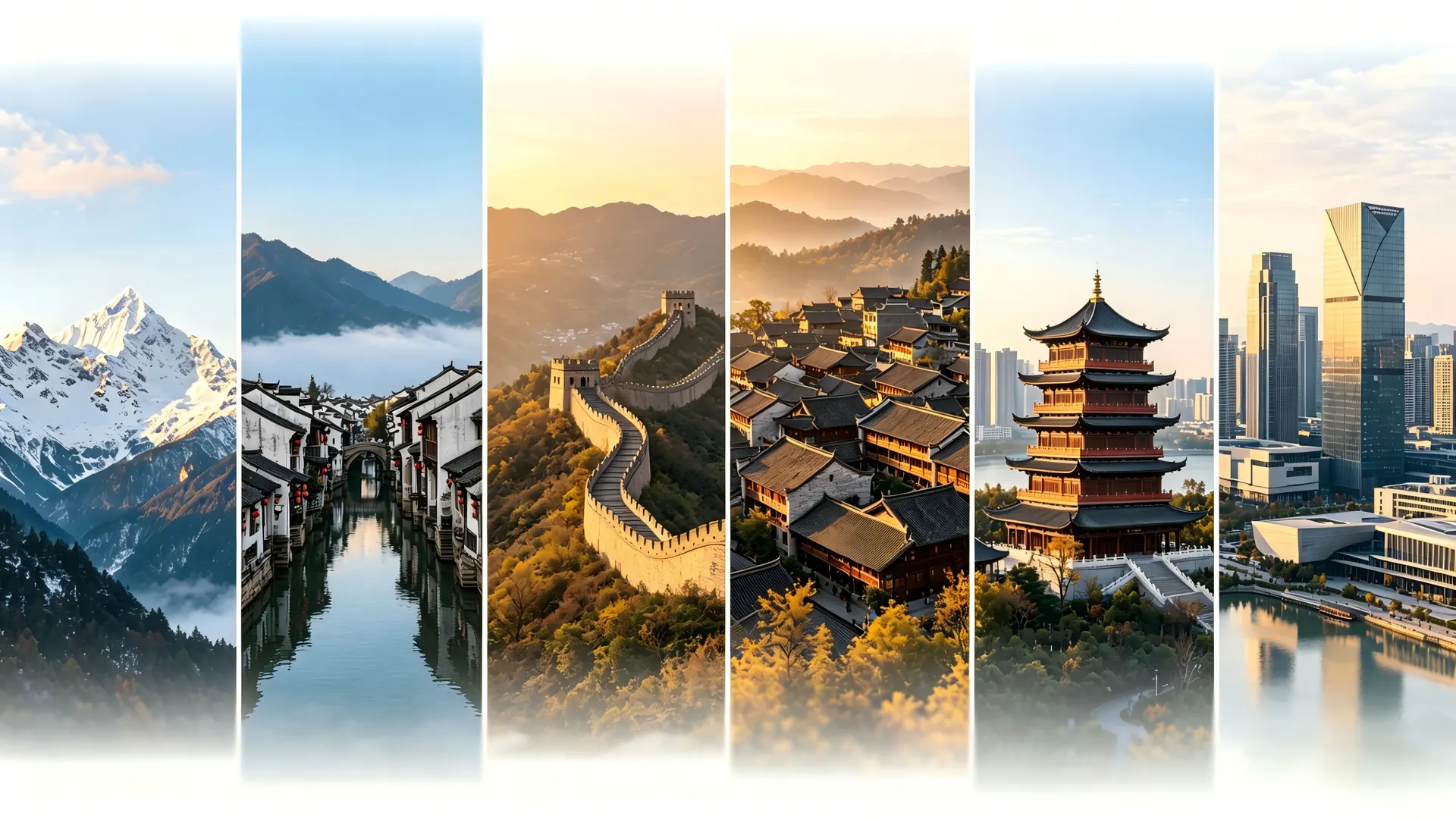
Choosing a China tour is not only about deciding where to go. It is also about deciding how you want to travel. The same country can feel completely different depending on whether the trip is built around famous landmarks, local food, mountain scenery, family-friendly pacing, or a more comfortable private route. A fast classic itinerary may suit one traveler perfectly, while the same route may feel exhausting or too shallow for someone else.
This is why the best China tour is rarely the one with the longest attraction list. The better choice is the one that matches your travel style, pace, budget, and expectations. Some travelers want a smooth first trip with major highlights and very little uncertainty. Others want a slower journey with fewer cities and more time in each place. Some care most about culture and history, while others care more about landscapes, comfort, photography, or traveling with children. Once those priorities are clear, choosing the right China tour becomes much easier.
How to Choose the Right China Tour
The best China tour usually depends on your travel style, pace, budget, interests, and how much flexibility you want.
- What kind of traveler you are
- Whether you prefer classic, scenic, or mixed routes
- Whether private or group travel fits you better
- How many days you really have
- How fast or slowly you want to travel
Start by Understanding What Kind of Traveler You Are
The most useful first step is to define what kind of trip you actually want. Many travelers begin by searching for the “best” China tour, but “best” only makes sense when it matches the person taking it.
A first-time visitor usually needs a different route from a repeat visitor. Someone traveling with children needs a different pace from someone traveling solo. A traveler who enjoys museums and historical sites usually chooses different stops from someone who wants rivers, mountains, and scenic train rides. Even two people visiting China for the same number of days may need completely different itineraries because one wants to move quickly and see more, while the other wants fewer hotel changes and more free time.
There are several practical questions that make this clearer. Do you want a classic highlights trip or a more specialized one? Do you prefer cities, nature, or a combination of both? Do you enjoy structured schedules, or would you rather have more flexibility each day? Are you comfortable with train stations, airport transfers, and quick packing routines, or do you want a slower travel rhythm with fewer moving parts?
These choices matter because China is large, and once you start moving between regions, the pace of the tour can change the entire experience. A route that looks efficient on paper can feel rushed in real life if it asks you to change cities too often. A shorter route with stronger focus often leaves a better impression than a longer route built only to include more names.
The Main Types of China Tours
Most China tours fall into a few broad styles, even when the titles look different.
A classic first-time route is built around the country’s best-known headline destinations. This type of trip usually focuses on places such as Beijing, Xi’an, Shanghai, and sometimes Chengdu, Guilin, or Zhangjiajie. It suits travelers who want a strong introduction and who do not want to leave China feeling they missed the landmarks most people expect to see.
A private customized tour is often the best choice for travelers who want more flexibility. It works especially well for couples, families, older travelers, or anyone who wants greater control over hotel level, daily rhythm, airport support, and sightseeing priorities. Private tours usually make it easier to reduce stress, adjust pacing, and avoid the most rigid one-size-fits-all structure.
A small group tour is often more suitable for travelers who want a social atmosphere and a clearer budget framework. For some people, this format removes the pressure of planning. For others, it feels too fixed, especially if they want to spend longer at certain places or travel at a gentler pace. Group travel can work well, but it depends heavily on how comfortable the traveler is with shared timing and less flexibility.
A family tour focuses less on checking off as many attractions as possible and more on comfort, travel rhythm, and variety. A family-friendly route usually needs shorter transfer days, more manageable sightseeing blocks, hotel convenience, and attractions that work across different ages. A route that looks good for adult travelers may feel tiring for a family if it requires too many early starts or long days on foot.
A nature-focused tour is very different from a classic city route. These tours often prioritize destinations such as Zhangjiajie, Guilin, Yangshuo, Yunnan, Jiuzhaigou, western Sichuan, or Tibet. This style suits travelers who care more about scenery, hiking, photography, mountain air, or countryside atmosphere than about urban sightseeing.
A culture-and-history route tends to focus more deeply on imperial heritage, archaeology, religion, architecture, traditional neighborhoods, and older forms of Chinese life. Beijing, Xi’an, Luoyang, Pingyao, Dunhuang, and some parts of Shanxi or Sichuan may fit this type better than a more scenery-led itinerary.
A luxury or comfort-first tour usually emphasizes quality of transport, hotel level, pacing, private guidance, and smooth logistics rather than simply adding more places. This style is not always about extravagance. Often it is simply about minimizing friction and making a long-distance trip easier to enjoy.
Private Tour or Group Tour?
This is one of the most important decisions in choosing a China tour.
A private tour is usually the better choice if flexibility matters. It gives more control over your departure pace, how long you stay at each attraction, where you eat, and how the itinerary is adjusted if weather or fatigue changes the day. It is especially useful for travelers with children, older family members, dietary restrictions, or a strong preference for hotel quality and lower-stress movement. A private tour can also be the better choice if the trip includes destinations that are less straightforward to combine on your own.
A group tour can work well for travelers who prefer a set structure and who do not mind sharing timing with others. It may also appeal to solo travelers who enjoy meeting people or who do not want to think about logistics. But group travel tends to ask for more compromise. If you strongly dislike waiting, moving at someone else’s pace, or following a standard route without much freedom, a private tour is often the better fit.
The real issue is not which format is better in theory. It is which one fits the way you like to travel. Some travelers value flexibility more than savings. Others value simplicity more than personalization. A well-chosen format improves the entire trip.
Private Tour or Group Tour at a Glance
Private Tour
- More flexibility
- Better for families, couples, and older travelers
- Easier to adjust pace and priorities
- Better for lower-stress movement
Group Tour
- More structured
- Often clearer on budget
- Can work well for social travelers
- Less flexibility and more shared timing
How Many Days Do You Really Need?
Trip length shapes tour design more than most travelers expect.
A 7-day China tour usually needs to stay focused. It works best for first-time travelers who want two or three major destinations rather than a long cross-country route. A week is enough for a meaningful trip, but not for trying to understand all of China at once.
A 10-day China tour is often one of the most practical choices. It gives enough time for a classic multi-city route without becoming too exhausting. Travelers can usually combine major cultural cities with one additional experience, such as pandas, river scenery, or mountain landscapes.
A two-week China tour offers much more freedom. It allows a better balance between classic landmarks and one or two more specialized stops. For many travelers, this is the point where the itinerary begins to feel less compressed and more complete.
Longer tours can be excellent, but longer is not always better if the pace becomes too fragmented. The key question is not simply how many days are available, but how much movement you want inside those days. A traveler with ten days who wants a smooth experience may be happier than a traveler with fourteen days who tries to fit in too many cities.
Choose Between Classic, Scenic, and Mixed Routes
Many China tours become clearer once you decide whether you want a classic route, a scenic route, or a balanced mix.
A classic route usually centers on major landmarks and historical icons. This is often the right choice for a first trip because it creates a strong foundation. Travelers see the places that most clearly represent the country’s history, imperial culture, major cities, and well-known attractions.
A scenic route usually reduces big-city time and increases natural landscapes, smaller towns, or high-visual-value destinations. This is often a better choice for travelers who care more about rivers, rice terraces, mountain parks, old towns, and slower travel atmosphere.
A mixed route is often the most useful option because it combines the reassurance of iconic cities with the emotional impact of scenic destinations. For many travelers, the strongest China tours are not purely urban or purely natural. They combine both, which makes the trip feel more complete.
The right balance depends on your interests. If you care most about Chinese history, a classic route should dominate. If you care most about scenery and photography, the scenic side should dominate. If this is your first and perhaps only China trip for a while, a balanced route often works best.
Match the Tour to Your Travel Pace
Pace is one of the most underestimated parts of tour planning.
Some travelers are comfortable with early departures, fast hotel changes, and full sightseeing days. Others want late breakfasts, time to explore without rushing, and fewer transport transitions. Neither style is wrong, but problems start when the tour design and the traveler’s pace do not match.
A high-speed itinerary can look exciting, but if every day starts early, ends late, and includes transport plus major attractions, the trip may become tiring rather than memorable. This matters even more in a country as large as China, where city changes often involve airports, stations, and hotel check-ins.
A slower-paced tour usually includes fewer destinations but more quality time in each one. For couples, families, and travelers who value comfort, this often creates a better overall impression. For highly active travelers who enjoy movement and want to maximize coverage, a faster route can still work, but only if the energy and expectations are realistic.
When choosing a China tour, it helps to ask not only “How much can I see?” but also “How much moving do I actually enjoy?”
Budget Matters, but It Should Not Be the Only Filter
Budget affects every tour decision, but it should not be used in isolation.
A lower-cost route may look attractive at first, but if it creates too many tight transfers, lower hotel standards, difficult logistics, or a pace that feels exhausting, the experience may be weaker overall. On the other hand, the most expensive route is not automatically the most suitable either if it prioritizes hotel level over the things you personally care about.
The more useful budget question is this: where will spending more actually improve the trip? For some travelers, the biggest value comes from better hotels. For others, it comes from private transfers, better-paced routes, or guide support in harder destinations. For family travelers, budget is often better spent on convenience and rhythm than on adding more cities.
A well-designed tour does not have to be luxurious, but it should feel coherent. The trip should make sense as a complete experience, not just as a list of prices and attractions.
Which Tour Style Fits Which Traveler?
A first-time traveler often fits best with a classic highlights route or a mixed route that combines cities with one major scenic stop.
A repeat traveler often fits better with a more focused regional tour, a nature-led route, or a special-interest trip built around food, photography, hiking, family travel, or culture.
A couple may prefer a private route with a slower rhythm, stronger hotel quality, and destinations that feel atmospheric rather than checklist-based.
A family usually needs a route with easier logistics, flexible pacing, and attractions that work for different ages.
An older traveler may place more value on comfort, private transfers, and fewer hotel changes than on maximizing destination count.
A solo traveler may prioritize either flexibility or simplicity depending on personality. Some will prefer private planning support; others will be comfortable with a small group format.
This is why “the best China tour” cannot be universal. The right route is the one that fits the traveler’s style, not just the destination list.
Common Mistakes When Choosing a China Tour
One common mistake is trying to include too many cities in too few days. This often happens because China’s major destinations all sound essential, but too much movement can flatten the experience.
Another mistake is choosing a route based only on famous names without thinking about travel rhythm. A route with better pacing often feels more rewarding than a more ambitious route with weaker flow.
A third mistake is not being honest about interests. Some travelers choose highly cultural routes when they are actually more excited by landscapes, or choose nature-heavy routes when they really want city energy and food. The itinerary should reflect genuine interest, not only what seems impressive.
A fourth mistake is ignoring comfort level. This includes not just hotel expectations, but walking tolerance, train comfort, food flexibility, and the ability to handle frequent transfers.
Final Notes for Travelers
The right China tour usually becomes clear when four things line up: what you want to see, how fast you want to travel, how much flexibility you need, and what kind of overall experience you want to remember. A classic first trip, a scenic journey, a family route, a cultural itinerary, and a private customized tour can all be the right choice for different travelers.
The strongest decision is rarely the one that covers the most names. It is the one that fits your style well enough that the trip feels coherent from beginning to end.